Episode Transcript
[00:00:04] Speaker A: The Right Mind is a podcast hosted by the Creative Writing Department at Austin Community College, featuring discussions about craft, creativity and what it means to be a writer.
The views, thoughts and opinions expressed are the speaker's own and do not represent the views, thoughts and opinions of Austin Community College. The material and information presented here is for general information purposes only. The Austin Community College name and all forms and abbreviations are the property of its owner and its use does not imply endorsement of or opposition to any specific organization, product, or service.
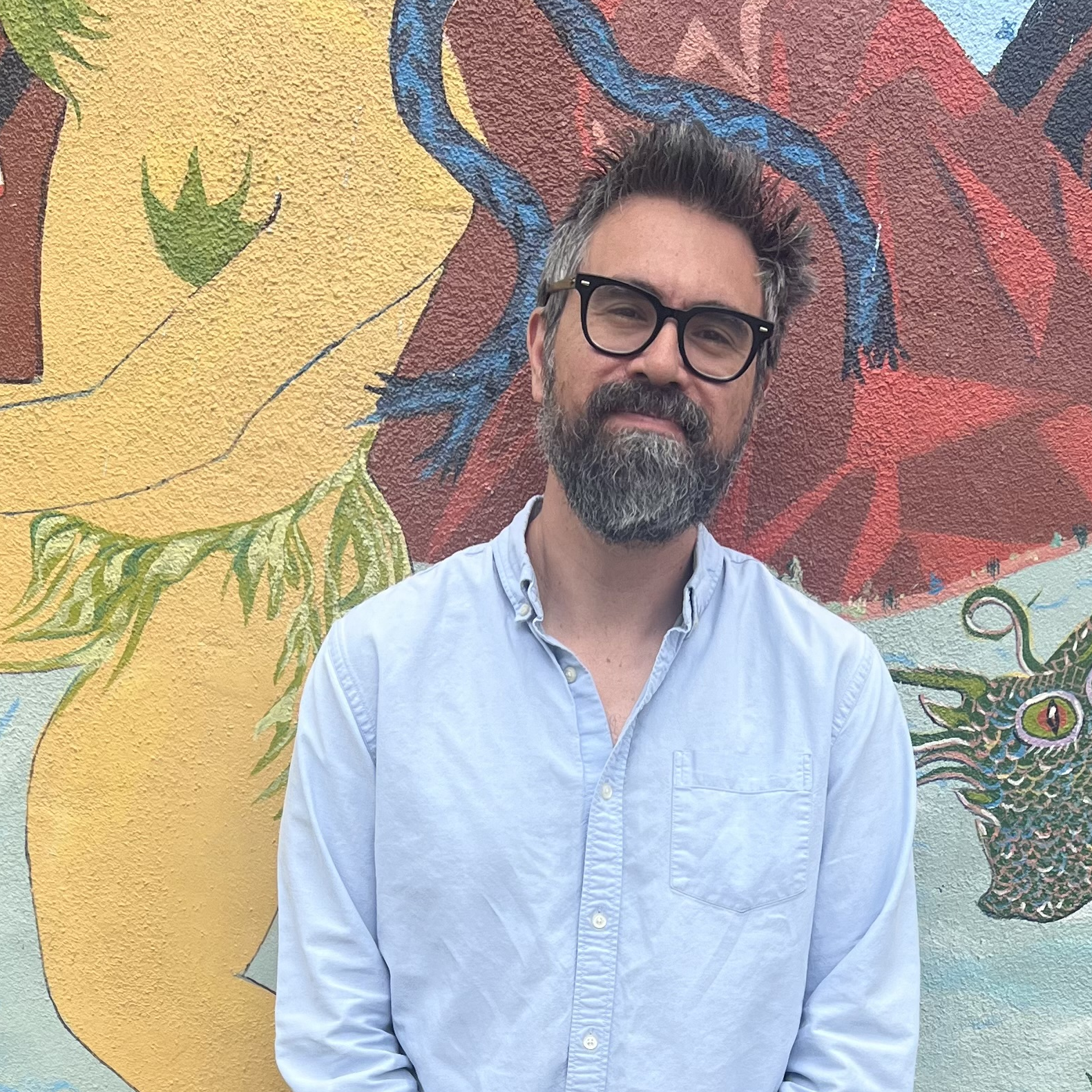
My name is Professor Eli Reiter. I work full time in the Creative Writing Department here at acc, and I am very lucky to be joined by our Department Chair, Prudence Arsenault. Hello.
And our guest of honor, the artist formerly known as the Poet Laureate of Dallas, Mag Gabbard, is the author of Sex, Depression, Animals, which was selected by Kathy Fagan as the winner of the Charles B. Wheeler Prize in Poetry and won the Writers League of Texas Book Award in poetry. The chapbook the Breakup, which was selected by Kaveh Akbar as the winner of the Baltic Writing Residencies Chat Book Award and the chatbook Minimal Poems. Mag is the recipient of a Pushkart Prize, a Discovery Award from 92 NYS Unterberg Poetry center, and fellowships from the Kenyan Review Writers Workshop, Idle Wild Arts, and Poetry at Round Top. Her work can be found in Poetry magazine, the American Poetry Review, the Paris Review Daily, Coppernickel Guernica, the Massachusetts Review, Poetry Daily, and in many other journals and magazines. Mag is a BA From Trinity University, where she graduated magna cum laude with honors in English, an MFA from the University of California at Riverside, and a PhD from Texas Tech University. She currently teaches at Southern Methodist University and served until 12 days ago seven or eight days ago seven or eight days ago. Even even more recent served as the 2024-2026 Poet Laureate of Dallas, Texas.
Very happy to have Matt Gabbard with us.
[00:02:09] Speaker B: Very happy to be here.
[00:02:10] Speaker A: Yay.
So let's. Let's start Icebreaker. Ish.
[00:02:15] Speaker B: Yeah.
[00:02:16] Speaker A: Right. And I'll let you choose Pop Tarts or Oreos.
[00:02:19] Speaker B: Whoa.
Oreos.
[00:02:25] Speaker A: Okay. Do you have a. A favorite variety of Oreo?
[00:02:28] Speaker B: Double stuffed?
[00:02:30] Speaker A: Double stuff.
[00:02:31] Speaker B: Yeah.
[00:02:31] Speaker A: Interesting. Why?
[00:02:33] Speaker B: Well, because the stuffing is double is the best part of the Oreo.
[00:02:39] Speaker A: Yeah.
[00:02:39] Speaker B: In case you didn't know. Yeah.
[00:02:41] Speaker A: I. Yeah. I.
I'm. I'm always going for the weird ones. Things like the Prudence is nodding. Things like the tiramisu thin.
I.
[00:02:51] Speaker B: Let me tell you what, though. It's wild. And maybe this is why I selected the Oreo option.
[00:02:56] Speaker A: Right.
[00:02:57] Speaker B: I needed a little snack from the hotel last night, and they have a little snack, you know, area, and they had a little hub of frozen ice cream bite Oreo things. Yes, okay. Yes.
[00:03:13] Speaker A: Okay.
[00:03:14] Speaker B: They were very melt in your mouth. They're not like.
They're not like ice cream ice cream. They're like a melty truffle, like confection that just goes like when you bite into it.
And I found those to be satisfying in small dose, but you could not eat the whole little hub of them.
[00:03:38] Speaker A: Not without trying real hard, I would imagine.
[00:03:40] Speaker B: Well, I mean, I feel that I could have done it because they go down easy, but I feel also like I would have regretted that vision ultimately.
[00:03:51] Speaker A: I'm a big fan of frozen things that go moolah when you eat them.
[00:03:54] Speaker B: Yes.
[00:03:55] Speaker A: I think that's what's supposed to happen.
[00:03:56] Speaker B: It's. It's the opposite of, say, lava cake. You know what I'm saying? Yeah. It's the frozen version of lava cake.
[00:04:03] Speaker A: Right. All the way the opposite. Dig it.
I think that's going to come up as we, as we go here. Going for the opposite of things. First, though, I'd love this. The kind of story arc, starting with background. When did you first know or have an idea that you wanted to be a writer?
[00:04:21] Speaker B: Yeah, so I've always known that I wanted to be in the arts in some form, and I mean truly, since I can remember. And early in my life, that took mainly the shape of music, singing specifically.
I enjoyed things like, you know, drawing and stuff like that, but I had no talent there.
And so I studied music all the way through lower school, middle school, went to the arts magnet high school in Dallas as a music major.
And throughout that time, I was also writing little stories, little things that I called poems.
But I didn't really have any exposure to the world of, like, actual contemporary poetry. I had some.
I did read plenty of just young adult novels, you know, stuff like that.
But the time when I really, really pivoted would be early in my undergrad career. The first year.
[00:05:29] Speaker A: Okay.
[00:05:31] Speaker B: I had gone initially to school to be a vocal performance major.
And you can imagine how thrilled my parents were midway through the freshman year when I said, guess what? I'm gonna change my major away from music. And they were like, oh, good.
And.
And then I was like, because I want to be a poet, you know?
Yeah. So. But I took a class as an undergraduate with still my poet mom, my mentor, Jenny Brown, former San Antonio poet laureate and former Texas poet laureate, and it changed everything. For me, I mean, I truly was like six weeks into that class, I was like, I gotta change my major. I gotta. Yeah.
And. And what's wild is I wasn't initially very good at poetry. I think it's really important to say that because I too, am a teacher, you know, and so I.
I like to emphasize the fact that I really don't believe much in the whole importance of, like, talent per se.
I think that skills and techniques, all of that can be cultivated.
What you need, the thing that can't be taught, is not talent, but obsession.
[00:06:49] Speaker A: Oh, that's really interesting.
Imagine if we could, though, teach that obsession. What a power that would be. I think. I think about, you know, the first opposite, because I had a feeling opposites were going to come up. Like the exact opposite of what your parents were hoping you were going to say.
[00:07:06] Speaker B: Right, right.
[00:07:06] Speaker A: To go from. Go from music to poetry as opposed
[00:07:10] Speaker B: to, say, pre med.
[00:07:11] Speaker A: Right, right, right, right.
So I imagine you dominate karaoke.
[00:07:18] Speaker B: I am the person who takes it a little too seriously.
Especially if I've had a couple of drinks, you know, then it's very serious.
[00:07:27] Speaker A: All right.
[00:07:28] Speaker B: I have, you know, a couple particular songs, and I really don't like to stray from where I know I can utilize my skill set, if you will.
[00:07:41] Speaker A: As a former karaoke host, I did a lot of that for my. During my undergrad to. For beer money. Really?
What were. What were the. I got to know what the. What your go tos are.
[00:07:53] Speaker B: Mariah Carey hero.
[00:07:54] Speaker A: All right.
[00:07:57] Speaker B: The fun one. Oh, and incidentally, I have to say this before I forget. So while you were being a karaoke host as an undergraduate, I was being a bar trivia host.
But the other song. That's fun.
There's a lot here because first of all, I have to admit, I have two favorite bands.
They are Linkin park and Third Eye Blind.
Third Eye Blind. And the youth will not know this, I'm sure, but Third Eye Blind, first of all, they slap. Okay. They're really good.
And they're. They're.
[00:08:33] Speaker A: Is that Semi Charmed Life.
[00:08:35] Speaker B: Semi charmed kind of life is Semi Charmed Life is the title is. Is like their radio song that and jumper.
That their radio music does not do justice to their discography. And in particular, they have a song called Slow Motion.
And on the album there are. It's just an instrumental track.
And it turns out the reason for that. And this is where you go deep into fanhood.
The reason for that is the lyrics were so messed up.
Drugs, violence, you name it. That people Were like, you can't. This is your debut album. This can't. No.
But they will perform this song with lyrics in. In live performance.
And so that's how people learned initially what the lyrics were.
And then I think eventually they came out with a recorded version with the actual lyrics. But so if you just. What, you can do a lot of karaoke, like, well, these days you can pull up anything on the Internet and do it. But back in the old days when they had to, you know, have a certain set of songs or whatever, you could just give them like the. The album. You could give them the cd, right. And be like, just play this track because it was already instrumental.
[00:09:56] Speaker A: Right. So you were. You. You were the one at karaoke taking it a little too seriously. And everybody else knew this is an instrumental track and you were slamming lyrics and vocals down on top.
[00:10:07] Speaker B: Everyone. El didn't know anything because they weren't listening to Third Eye Blind like they should have been, but like they should have been.
[00:10:15] Speaker A: I love that. I love that.
And I could probably talk about. I'm a music geek. I could probably talk about.
[00:10:21] Speaker B: I also have one more. Sorry. Yeah. And this is an important one to me because I'm quite good at it.
[00:10:27] Speaker A: Okay.
[00:10:28] Speaker B: Miley Cyrus, Wrecking Ball.
[00:10:30] Speaker A: Oh, man. I. I did.
I promise we're going to talk about poetry. I promise we're going to get there.
[00:10:36] Speaker B: But are we not?
[00:10:37] Speaker A: We are. We are indeed.
I did. I used to do bar cover gigs.
Just four hours of sing along stuff. And I would mash up Wrecking Ball with she Will be loved, the Maroon 5 and U2's with or without you, and it would confuse people and irritate most of them. And I. That's what I liked most about it.
[00:10:59] Speaker B: For those who enjoy Miley Cyrus's Wrecking Ball and who also have a bend toward emo screamo and hardcore music, there's a wonderful rendition of that song by a group called Our Last Night.
And it's. It's a really good screamo.
[00:11:16] Speaker A: Yeah.
[00:11:17] Speaker B: Yeah. Iteration.
[00:11:18] Speaker A: Our Last Night.
I always end up finding band names, like random band names in conversation, but I don't think we're going to top that one. Our Last Night. Let's get back to poetry.
[00:11:31] Speaker B: Great.
[00:11:31] Speaker A: Or let's talk about a different form of poetry.
[00:11:33] Speaker B: Sure. I mean, it's all poetry.
[00:11:35] Speaker A: It's all poetry in that class. I mean, you said six weeks in, you knew, Right? So what was it about? Was it the instructor? Was it the material? What was it about that class that said poetry is the thing this is
[00:11:48] Speaker B: a really good question.
Poetry gave me a space to explore the questions of the interior in a way that I found extremely satisfying. You know, I think probably most artists in general, but I would certainly say most, quote, unquote, good poets are extremely curious people.
I'm a really curious person and I didn't have a mechanism for exploring the things that I'm curious about. Things like, for example, Prudence and I were just talking about, like quantum mechanics. I'm curious about quantum mechanics, but I am not an effing mathematician or, you know, physicist. Right. So I have no business exploring that kind of topic in the discipline of theoretical physics.
But poetry gives me a space where I can make discoveries of my own that still teach me something about, I mean, I guess ultimately what it means to be human.
[00:12:57] Speaker A: Right.
[00:12:58] Speaker B: And what it means to exist on a planet that has life.
[00:13:03] Speaker A: Right, yeah. So it comes back to writing as a, as a practice of inquiry and discovery rather than destination. Correct, Right. And I think that that again, everything is poetry. I mean, that is every, every piece of writing is a discovery.
I want to get at in, in that discovery. In those early poems that you've said that were not great. Yeah, I'd love to hear about it. Maybe the first bit of feedback that was really impactful that really changed how you approach writing.
[00:13:33] Speaker B: So initially, here's something interesting. I mean, I, I, I just gave you one spiel about why poetry is so important to me. But I think before that, the very first thing that kind of came to mind, which is a similar thing in a way. So I was, as I said, sort of a musician. Right. I was a singer, but I didn't hear, again, I didn't have the skill set to be like a composer or to accompany myself on instruments. Even though I had taken piano and guitar and stuff, I never really got to sort of that level.
And so initially I wanted to explore like the music of language. And like, there's just what it, the interesting stuff of how language is made, which I would also say is, is something that like most poets have a deep interest in.
And so I'll never forget because, yeah, I, I spent a while, even as I began to learn more and more about kind of shifting away from just exploring the, the musicality and the languagey ness into more deeper kinds of like, content inquiry, you know.
But I'll never forget the most impactful feedback I ever received wasn't actually that first year. You know, it was regular kind of workshop feedback that I was receiving mostly. But then my senior year, I wanted to apply to MFA programs.
And so. And I went to Jenny, who, just for context, I mean, I was very close with Jenny. I babysat her kids at that point. I had taken three or four classes with her. I truly. And, and, and I had a troubled and broken family. My dad was in prison, a number of things. And so she really, truly was like a family, a maternal figure to me.
And I went to her and I said, I want to apply to MFA programs. Will you write me a recommendation letter?
And she said, of course I will, but you're not going to get in because you don't revise.
Oof.
And it was exactly, ultimately what I needed to hear. Right.
And. And because we were on that level, it was probably for the best that she was, like, as blunt as she was.
[00:15:53] Speaker A: Right.
[00:15:54] Speaker B: But, yeah, it was a shock to the system, and that changed everything.
[00:15:57] Speaker A: I mean, you were talking about. You talked last night. We're going to get into this a little bit later, but you talked last night about the number of revisions you have for each of your poems. And it seems really directly connected now.
[00:16:07] Speaker B: Oh, yeah, right.
[00:16:08] Speaker A: To have 25 or more versions of a poem before you can call it done. Coming directly from.
[00:16:13] Speaker B: Yeah. And I have some that exceed 50 saved drafts.
[00:16:18] Speaker A: That's. That's quite a few.
[00:16:19] Speaker B: Yeah.
[00:16:19] Speaker A: But, but you work until it's worked.
[00:16:22] Speaker B: I work until. Yeah. I mean. And one of the hardest things I think about being a writer in general, and I mean, we all get these. This type of question, how do you know when a poem's finished? Right.
And there are even poems written with that title. How do you know when a poem's finished?
Naomi Shihab Nye has one, for example.
So I think one of the hardest things for me to learn that I really had to go through, not just undergrad, but an MFA program and a PhD program in creative writing to get somewhere with was to be able to decide myself by myself, you know, if a poem was finished.
It's very hard to wean yourself off of the process of receiving feedback, particularly from mentors who are brilliant and whose edits you trust.
And so that was a long process in coming.
But ultimately, and even now, you know, on occasion, not. I wouldn't say it's the norm, but on occasion I'll seek feedback from a friend or two on something if I have a specific question.
[00:17:27] Speaker A: Right.
[00:17:28] Speaker B: But, yeah, I revise it until it's done. And the way that I know if it's done is basically that if I can put it away for at least a few days, maybe A week, maybe two weeks. You know, enough time to kind of not be in the headspace of having just written it.
[00:17:46] Speaker A: Right.
[00:17:47] Speaker B: Come back, read it, and not see the edits that need to be made.
Then it's done.
[00:17:53] Speaker A: Right on. And it took you through an MFA and a PhD to do that. Which really gets me to. To my next question. Before I ask that, I want to shout out, there is some love for our last night in the chat.
[00:18:04] Speaker B: Oh, amazing.
[00:18:07] Speaker A: And just reminder, if you have questions, put them in the chat. We will have a portion of this later on where you get to ask questions.
So Mag will talk about what you ask or, you know, we'll decide if she wants to talk about what you ask.
[00:18:19] Speaker B: We will see.
[00:18:20] Speaker A: Yeah, we shall.
[00:18:21] Speaker B: Done, Dundee.
[00:18:24] Speaker A: But the. The.
The MFA to PhD, that, that arc. I'm. I'm curious about.
I mean, you said six weeks into the poetry class, you knew it was poetry. Right. And you dropped the lava cake versus Oreo ice cream version of changing the major. Right.
The. The next step. So you get through the ba, what takes you to an mfa. And then I'll have a. Have something else after that. But how did you decide on the MFA program? What were the.
What were you really looking for? And, and I'm going to try not to be biased in this conversation because we went to the same mfa.
[00:18:59] Speaker B: We did go to the same MFA program.
So I mainly decided I wanted to get an mfa, you know, because I loved poetry and I wanted to do poetry. Right. And I wanted to like the idea that I could continue to learn in the. In the manner that I had been learning as an undergrad. Except only poetry classes.
[00:19:21] Speaker A: Yeah.
[00:19:22] Speaker B: Was extremely appealing, which I think is
[00:19:24] Speaker A: really the best reason for. To change the fa. Right.
[00:19:28] Speaker B: And then secondarily, I didn't know what the f. I was gonna do.
[00:19:31] Speaker A: Yeah.
[00:19:32] Speaker B: For a job. So I was like, let me continue to go to school.
[00:19:36] Speaker A: Yeah.
[00:19:38] Speaker B: So how I decided on a program.
Well, a fun fact about me. I have clinical obsessive compulsive disorder.
And one thing that's very, very difficult for me is relocating, moving.
And when I had moved from Dallas to San Antonio for my undergrad degree, that was a really traumatic, difficult transition for me. And I ended up most weekends being back in Dallas.
As much as I enjoy traveling, there was something about the idea of sort of being permanently somewhere else that was very psychologically hard for me.
And so I knew then, having discovered what it was to have a low residency MFA program, I knew I wanted to go that route and so had applied to A handful of the best ranked programs.
And then you may, you may have shared this experience with me, Eli. But, but from there, not only was it that I wanted to study with Matthew Zapruder and Jill Alexander sbound, but perhaps even more importantly, I'm sorry to say I got a phone call from Todd Goldberg, director of still the director of the UCR program.
And he said, you know, where else did you apply? I listed off some of the places, including Bennington, where Todd himself received his mfa and you know, told him I'd also gotten into those spots. And he's like, and that's really great. And they will probably teach you how to write a good poem and you'll sleep on a plastic covered mattress in a dorm room.
Do you want to do that or do you want to be in a four star resort for the same tuition dollars?
[00:21:23] Speaker A: Right, right.
[00:21:24] Speaker B: And my bougie but was like, oh, fly me to Palm Springs then.
[00:21:30] Speaker A: Right?
[00:21:30] Speaker B: Yeah.
[00:21:31] Speaker A: My experience with that and this isn't about me, but yes, you're absolutely right. It was. I app a bunch, got got it. Got accepted to a handful of them. And then Todd called and told me almost exactly that, but also told me I got to work with Stephen Graham Jones.
[00:21:44] Speaker B: Yeah, yeah.
[00:21:45] Speaker A: And then hit me with a resort. And I was like, well, I mean, okay, sold Antioch, got nothing on this.
So yeah, that is really similar. And then I think having been to that program, it automatically generates a question for me about going from that MFA program to still pursuing studying. Right. So tell me about the decision to PhD.
[00:22:11] Speaker B: Yeah. And something that's worth noting because in general, I would say there's almost no downside to a low residency program for an mfa. There's one small exception that I got very lucky with because I did not anticipate when I was applying to MFA programs that I might ever want to get a PhD.
It's and it's just less common to get an acceptance to a PhD in creative writing program from a low residency MFA because I think there's such a heavy teaching component involved. And if you're doing a full residency mfa, then you probably are doing some level of teaching or taing or something like that.
[00:22:55] Speaker A: Right.
[00:22:56] Speaker B: So that's where that comes into play.
I was starting to kind of think about, yeah, what am I going to do?
I was at the time while getting my mfa, like cocktail waitressing, you know, and I knew that I wanted to continue to pursue poetry. I knew also that I still wasn't as good as I wanted or needed to be. And more importantly than that did not know how to yet to make myself better consistently by myself.
Because in reality, like all of us, we should always be developing and getting better. If you. If you reach a place in your art where you're like, oh, I've arrived, you know, this is as good as I wanted to be, well, there's a. There's a problem there.
So I knew those things.
I then also was beginning to learn that there was such a thing as a PhD in creative writing, which is a fairly new thing in general.
[00:23:59] Speaker A: Yeah.
[00:24:00] Speaker B: And honestly, what did it for me, and I'm so grateful for this, was toward the end of my time at ucr, I had a meeting with Matthew Zapruder, my teacher and a beloved mentor.
And he said, so what are you going to do next? And I said, I don't know.
And he's like, you're really smart, and I think that you should get a PhD. I think that you could do that, and I think that you could teach, like, at the higher ed level if you wanted to.
And so for me, like, him saying that was the. I never would have thought it was in the parameters of what was possible for me if I hadn't heard it from him. And so that set me immediately on the track of applying.
[00:24:47] Speaker A: You know what I love about that is, and it's a familiar feeling for me too, is coming out of the ba not knowing what the hell you want to do. So let's keep studying. Right. And then you get through the MFA and you're like, well, let's keep studying. And then the end result is, here we all are in this room. The result of not stopping studying, just doing it in a much different way in a different part of the classroom.
[00:25:10] Speaker B: 100%. And I feel that every day, and it is what I love so much about being an educator, that I am also learning. Yeah. All the time. And getting to be in the classroom.
[00:25:21] Speaker A: Yeah.
[00:25:21] Speaker B: And go to school.
[00:25:22] Speaker A: So in a way, like, the. The what do I do now? Is really just what I've been doing.
[00:25:28] Speaker B: Right.
[00:25:28] Speaker A: Just, you know, figure out how to do it forever.
[00:25:30] Speaker B: And at a higher level. Yeah. Ultimately.
[00:25:33] Speaker A: And definitely at a higher level, too.
Otherwise, like you said, like, if we're not growing, what are we. What are we doing?
[00:25:38] Speaker B: Yeah. Yeah.
[00:25:40] Speaker A: So I think about my MFA experience, and I think this is a common experience for those who went to grad school in these fields.
The aspect of community is huge.
[00:25:52] Speaker B: Yeah.
[00:25:53] Speaker A: Right. But a unique experience to craft, curate, foster, maintain in a low residency.
[00:26:00] Speaker B: Yes.
[00:26:00] Speaker A: So I'm curious about maybe the. The way Community came together for you as you're going through the MFA, or maybe how it changed to getting to the PhD, which I'm sure was a different kind of experience.
[00:26:14] Speaker B: Yeah, I mean, obviously there's a different level of immersion there, no matter what.
And incidentally, just to tie this all back in to the conversation about sort of the difficulty that I have with relocating, it's not a coincidence that I went to Tex Tech, four and a half hour drive from Dallas for my PhD because there again I was making that commute on a pretty regular basis.
[00:26:44] Speaker A: It's El Paso. Right.
[00:26:46] Speaker B: Texas Tech, Lubbock.
Much closer. Yeah, Four and a half hour drive from Dallas.
Which to me. And as long as you're not going on, say Thanksgiving week, when all the students are on the road, there's, it's usually like a wide open road. So not so bad.
To this day, my UCR friends and connections are some of the closest that I have in the writing community. I mean, you know this like we go to AWP every year. It's this big writers conference. There's like 12,000 people.
And Eli and I are like sitting at the UCR booth, you know, hanging out with Todd and other friends who are passing through it 100% changed my sense of community in the writing world, particularly because even though I had Jenny as an undergraduate, I was not in an environment where I was surrounded by aspiring writers.
There were just a couple of us who really wanted to go that track and actually two people who were also in classes with me and Jenny, who also ultimately received MFAs and are still writers and who I still have connections with, but they also went to different parts of the country for their MFAs and all that.
What's interesting about my time at UCR, and I think it was just kind of happenstance because it is, you know, these are smaller programs, they're fairly boutique. Any, anyone in your cohort.
You know, when I was there for poetry, I think student wise, there were maybe seven poets at any given point.
So it just so happened that the connections I formed were primarily with fiction and nonfiction writers.
And so I made this, this huge kind of base network of friends and connections in the writing world, but mostly on the prose side, aside from my teachers, Jill and Matthew.
And so one key difference for me in hopping over to the PhD program was that I, and here again, this could be pure luck because you never know who you're going to click with socially. And the PhD programs, similarly very small. They would bring in each year three new PhD students in a mixture of either poetry or prose.
[00:29:22] Speaker A: That's small.
[00:29:23] Speaker B: Yes. And so at any given point, you would have maybe 12 people active and maybe six of those poets and six of those fiction writers or nonfiction writers.
So I made much stronger connections with poets during my time at Texas Tech, and I think that that was.
And also just that they were my peers at ucr. Even though I do have a number of close friends who were also kind of going through the program when I was going through the program, there's still a lot of my connection, my friendship connections. There are people who were teachers and mentors to me, like Todd.
And so it was really important for me, I think. And that was just my personal experience. I don't think it's everyone's experience, but it was important for me to form these relationships with people who were really, like, on my level, doing the same thing that I was doing so that we could kind of share that journey together.
[00:30:35] Speaker A: Sharing and commiserating and supporting. Right.
We talk about prudence, and I talk about this a lot, and we talk about this with our students a lot. The. The act of writing in and of itself, like the words to Page, it's kind of a solo act. Right. But the life that leads to that can be.
[00:30:55] Speaker B: Right. Right.
[00:30:57] Speaker A: So we like to highlight the importance of community.
[00:30:59] Speaker B: Yeah.
[00:31:00] Speaker A: And we had a really similar experience, too. I mean, my.
My closest friends now, not just writing friends, my closest friends came out of the MFA program then. I'm hoping that we're creating that for our students here. Yeah, yeah, yeah, I'd love. So with. With all of that, we kind of get to. And again, if you have questions, throw them in the chat. We will. We will pop them in.
I want to take all of those experiences. The. The. The. The music, the BA the mfa, and the low residency and, you know, the struggles being. Being in more than one place at a time or not being home. Right. How do all of these things shape your approach to craft now?
[00:31:43] Speaker B: Hmm.
So just to clarify, is this kind of specifically through the lens of navigating kind of space and location, you mean, or just more broadly, like, how do all these programs coming together, all of the different kinds of mentorship I received along the way, ultimately come to shape my approach to craft?
[00:32:06] Speaker A: All of the above.
[00:32:06] Speaker B: Okay.
[00:32:07] Speaker A: Yeah.
[00:32:08] Speaker B: It's a big question, you know.
[00:32:09] Speaker A: Yeah.
[00:32:12] Speaker B: As I. As I said, as I kind of led with early in our discussion, my key approach to craft is very much that you do not have to be born with it.
And in fact, I think people who do have a certain level of Natural talent coming in do not.
Sometimes they. They are more likely to lack the obsession.
[00:32:37] Speaker A: Right.
[00:32:38] Speaker B: That drives you to a place of really pushing the envelope.
So I think a key that. That was a key feature for me because I was learning all the way through these different programs that I attended how far the milestone that I wanted to reach was from the work that I was producing.
[00:33:03] Speaker A: Right.
[00:33:04] Speaker B: And the more that you can see the precise manner in which you are not reaching that place. Right. Like, to use the analogy of a milestone, like, the more you see the actual landscape and whatever it is, the gravel, the hilly terrain, the river you have to cross, you know, if you think about that from a craft perspective, like, what is the gravel? What is the river? What is. What are these things that I need to, in a concrete, practical way, do better, right.
So, yeah, I mean, all along the way, each of it was so helpful, as I'm sure it is, for any student to have a variety of perspectives, not just from one mentor. Because, you know, ultimately, much as we may try to teach in multifaceted ways that capture different kinds of learning experiences and all of that and that speak to different styles and different voices and. And all of those different things, like, at the end of the day, there's a part of me that's always going to teach toward the kind of poetry I prefer.
[00:34:22] Speaker A: Right.
[00:34:22] Speaker B: You know what I mean?
Like, when I'm giving someone revision suggestions, I usually try to just openly put that disclaimer of, like, this is partly about my taste in poetry and how I think how I prefer for poems to move. Not necessarily because I want to suggest that there's a formula we should follow or anything like that. It's, you know, quite the opposite. But, like, this is the way I would push the envelope versus this is the way, you know, Natalie Diaz would push the envelope or whomever.
And so the more perspectives you get, the more you see the different possibilities that are out there.
And what I like to always tell my students as a part of this is like, you know, find not just one writer, because sometimes people get fixated on one favorite writer.
But I'm like, find minimum, a handful, if not more writers whose work you really admire, and pick a poem and try very hard to emulate the voice and style in that poem.
And people will often be like, you know, let's say Terence Hayes, for example, like, do this with Terrence Hayes's work, if that's whose work you're loving right now. And they'll be like, but, oh, I don't, you know, I Don't want to be derivative. I don't just want to write exactly like Terrence Hayes. To which my response is always, in your wildest dreams, you will never write exactly like Terence Hayes. That's why Terrence Hayes is Terence Hayes.
[00:36:09] Speaker A: Yeah. And you are you.
[00:36:11] Speaker B: And ultimately, it's in the ways that you fail to write like Terence that you begin to discover how you write like yourself.
And the more you do that with different writers, the more you begin to chisel away the parts that are not specific to you.
[00:36:29] Speaker A: Right.
[00:36:29] Speaker B: And hone in on the thing that is you.
[00:36:33] Speaker A: I love the. I love the centering that on.
On the ways in which you fail to emulate.
[00:36:39] Speaker B: Yeah.
[00:36:40] Speaker A: Are. Are the. The ways you're showing up. Really? I love that.
And that was a fabulous answer. I know. That was a big question.
Big question. There's also. I should. I should say there's also love in the chat for Linkin park, too. I want to skip over.
[00:36:54] Speaker B: Hell, yeah. But. But Linkin park, when Chester Bennington was the lead singer.
[00:36:59] Speaker A: Right.
[00:37:01] Speaker B: You know, I haven't followed really their journey since then. So I. No disrespect, I'm sure they're still incredible, but Chester really had a space in my heart. And actually it was one of, you know, we all have, like, that celebrity death that really hits us. And for me, yeah. 2017, it was Chester, for sure.
[00:37:20] Speaker A: Right.
Yeah. Yeah.
A couple more questions.
[00:37:25] Speaker B: Yeah.
[00:37:26] Speaker A: First, though, from the chat, loving the advice of.
About taking on an author's voice, but using that to find their own is something they're looking forward to now. So that's. That's resonating just.
[00:37:40] Speaker B: Yeah, yeah. And, you know, again, you just. There is a fine line to kind of walk in terms of, like, sort of derivativeness.
[00:37:47] Speaker A: Right.
[00:37:48] Speaker B: You have to think, too, about how much the features that you're emulating are like, it's always a good exercise to try this regardless.
But, like, I think of, you know, my closest poet friend is Chen Chen. He has a very distinct voice.
And you'll hear sometimes editors talk about, like, oh, now everybody's trying to write like Chen Chen. So this is why it's important to diversify and not just choose the one writer who you're going to do that with. Make it an exercise like a weekly thing. Pick a poem by each week a different poet, and do try to make the moves. Sometimes it might be in voice and style, but sometimes it might be formally, you know, or syntactically try to make the moves of that poem in a poem that is not that poem, but your poem.
[00:38:41] Speaker A: Right, yeah. The diversifications.
Right. The last bit. And maybe. Maybe you've given it last two questions, and we do have one or two in the chat. The first is, what do you think the best writing advice you ever got was?
[00:38:58] Speaker B: So the. The thing that really resonates with me and that I often repeat to my students.
I don't know that you even call it writing advice so much as a description about writing that I found so very, very helpful. And it speaks to a little bit like our conversation yesterday about discovery during the event.
Q and A portion. But it was Matthew Zapruder in my time at UCR who at one point said, a novice poet will write in the most veiled and obscure way possible about something that could be stated clearly and simply.
And a seasoned poet will write in the most clear and direct way possible about that which cannot be said.
Wow,
[00:39:51] Speaker A: I'm gonna let that wash over me for a second. Yeah, that's a big deal.
[00:39:54] Speaker B: It's. Yeah. I mean, and that's, to me, like, that is it like, if I were to tattoo. If you were like, you can only say one thing for the rest of your life, but you have to teach writing just saying that one thing. That's what I would say.
[00:40:07] Speaker A: And it's almost the thing in workshops
[00:40:09] Speaker B: where people are afraid to step over a line.
[00:40:13] Speaker A: And the argument is like, you have to step over the line. Like, everything in society seems to tell us to mask that stuff.
[00:40:19] Speaker B: And instead it's like not.
[00:40:22] Speaker A: Not even just step over, jump into the thing that is the most uncomfortable, which is that honest.
[00:40:28] Speaker B: The line is actually where the poem begins.
Only when you go over it. Yeah, I mean, I. I have a writing exercise which Feel free to. You know, obviously we're sharing it here now that I use to try to get people into that space where.
Because a lot of the time when I'm working with new poets, what's happening is they're writing toward a specific ending that they're envisioning. Right. And so I'll say, start. Start with the end.
Or another thing I'll say, because a lot of times poets are maybe doing this weird thing, speaking to Matthew's kind of teaching thing, that the whole poem is almost a riddle of figuring out what the poem is about.
So another exercise that I often do is like, the first line of your poem is, this is a poem about blah.
Now you have to keep writing for 10 minutes without picking up your pen and see what comes out.
[00:41:33] Speaker A: Right.
[00:41:35] Speaker B: And the key being that the thing you thought you were going to say is over with immediately.
So now what the. Now what is the poem? And obviously when you write for 10 minutes straight, that's not all going to be.
This is just raw material that gets you a starting point that could create your nugget, what I would call your nugget of real poem. You extract that from the exercise and move forward with that.
[00:42:03] Speaker A: Well, it gets back to the giving feedback. Like push the envelope in this way. And push the envelope in this way. Like this writer. Like this writer. But then it's. And not until you've pushed some envelope, transgressed some. Some boundary that then you have, and you were talking about this last night, then you have the risk that creates the poem.
[00:42:21] Speaker B: Yeah, right. I would just add as well that the other key advice that I really think of it more as just key life advice, but also writing advice also came from one of my mentors at UC Riverside, Emily Rapp Black.
She used to always say, and she taught nonfiction and I took nonfiction with her. She used to always say, chaos touches everyone.
And to me, what's so important about that sentiment is the idea that in order to be an excellent writer, you have to be excellently self aware.
And that here again, that's something that's very hard to teach, especially since we're not all licensed therapists.
But what that phrasing of chaos touches everyone. What that does, I think is reminds us that in this, whatever it is that I'm writing about, the situation is worth voicing. The perspective is worth voicing. But it doesn't mean that you're unique or special.
It's actually because it's a shared experience in some ways.
Key.
And also that just, you know, that sense of like we never know, like when we, when we create characters, for example, to make sure that they're multi dimensional, that they have depth, like you don't know the life inside another person. Yeah,
[00:43:49] Speaker A: yeah. I'm still reeling from all of that.
Yeah, brilliant stuff. Brilliant stuff.
[00:43:57] Speaker B: Question, Matthew and Emily,
[00:44:01] Speaker A: and through you as well, though, I mean, you know, I think we are all products of our, of our environments in some way. Right. But then chaos touches everyone. But then what we bring to the page is a product of how we're filtering.
Right. Question from the chat, Mia asks, how do you find what you want to write about? I struggle to find that muse or source.
[00:44:28] Speaker B: So I think that's. That's a difficult. Yeah. Question.
It's a great question. But like the. I think part of what I am talking about when I talk about obsession is that there is no such thing anymore as being inspired. I wake up every day, and if I have a free moment, I am going to write.
[00:44:50] Speaker A: Right.
[00:44:52] Speaker B: Doesn't matter if I have an idea or not.
What I tend to find that works for me. I think many writers have different tactics, and mine is not unique. There are a lot of writers who do things like this, but I keep a running note in my phone of just encounters I have overheard, dialogue, imagery that I see or things that crop up in my brain philosophically or from my readings or what have you.
And so when I don't already have an inherent place that I feel like starting, or when I'm not just diving into a piece that I've already begun to work on, then I'll go to that place, to that note, and just pick something from it and be like, okay, this is the centerpiece of whatever I'm going to start to work on.
Doesn't have to necessarily wind up as the beginning or whatever. I mean, oftentimes my writing process. And again, this is not everyone's writing process. But I don't just start by drafting a poem. I start by brainstorming the associations that I want to pull into the poem. Then I begin a process of organization and polishing and getting the syntax and the line breaks, and those kinds of things
[00:46:15] Speaker A: comes back to. And I think this is something that we hear quite a bit. You get to a point in your writing career where it's no longer a Where's the inspiration. It's. This is the seat and the page, and this is where I am, and I'm going to make something happen here because I've learned the skills to make something happen.
[00:46:33] Speaker B: Right. And the inspiration is I'm obsessed with being a writer. And that is what makes me feel alive to have the opportunity to face the blank page and figure out something. Yes. To do with it.
Even though that doesn't mean that it's easy. Right. Like, and it doesn't mean that it's always a smooth process or anything like that. But it's often for me, it's in that early point that. That brainstorming point, before I'm really even putting together what I would rightfully call a draft, that I'm making the discovery that will allow me to create a good poem.
[00:47:08] Speaker A: Right.
[00:47:08] Speaker B: Yeah.
[00:47:10] Speaker A: Do you find. And this, I think, might be our last question. Do you find. Just following up that as you're.
And I kind of love the idea. There's so much fear around conversations about facing the blank page. And I kind of Love again. Flipping that on the. On the. On the. On its opposite side and like the opportunity to.
To confront the blank page.
Do you find that.
That a poem will teach you its own process as you're writing it?
[00:47:36] Speaker B: Yes. I think that every time you write a poem, you have to relearn how to write a poem.
Otherwise you're not being creative by the definition of creativity.
[00:47:47] Speaker A: Oh, that's really interesting.
[00:47:48] Speaker B: The definition of creativity is that you are doing something differently than it has ever been done before.
The poem is, to use the terminology that people use in the creativity world. The poem is the problem that must be solved.
Just as people can be creative in an entrepreneurial sense or in a scientific sense or what have you, in an artistic sense, the poem is the problem.
And the problem primarily is how do I write a poem in a way that has never been written before?
And so what I am most suspicious of, and the thing that I think becomes more difficult, actually, the more that you've seen success as a writer and the more that you've learned certain things that you're good at as a writer, is to push against those, to be suspicious of the moves that you make, the addiction that you tend toward the kinds of structures and forms that you're used to. For me, this is a key part of the process is, but how do I do that?
But not like that.
Yeah,
[00:49:01] Speaker A: we have another question in the chat, but I've noticing a lot of.
And I think this gets at. This gets at what creativity is. It's doing something new, right? There's a lot of resistance, a lot of pushing against that you've talked about. Which then comes back to, if we're going to do something in a way that's never been done before, then we're pushing against expectation, we're pushing against current skill sets, we're pushing against canon. Really.
[00:49:29] Speaker B: You're taking a risk.
[00:49:30] Speaker A: Yeah, taking a risk. There it is.
Question from the chat. Sarah asks, do you have any advice for finding time or making time to write?
[00:49:38] Speaker B: Boy, this is. This is a really.
This hits deep for me because what I learned just for context here, as the Dallas Poet Laureate for the last two years, I was doing an average of seven to eight. And I actually, I keep a work log where literally down to the minute, I can tell you every single day if it relates to writing or work, what I've done and when I did it, whether it's emails or this podcast or you name it, the drive down to Austin, I have this work log, right? And it's just a second Nature for me to always keep that and came in really handy when I had to write a report. You have to write an annual report as a Dallas Poet laureate. Turn it in. What have I accomplished? Well, guess what? They got data.
And what I learned, what they were
[00:50:30] Speaker A: not expecting a poet.
[00:50:31] Speaker B: I'm sure what I learned is that I was putting in seven to eight hours a week and I have a full time job.
[00:50:36] Speaker A: Right.
[00:50:37] Speaker B: And I have a mom with pancreatic cancer and I have, you know, other things going on. Right. And most, most, most, most importantly, I need to write and I'm doing, you know, events like this many events all the time.
And so I think real dedication to a craft of any kind of requires some sort of sacrifice.
I don't necessarily think that looks the same for each person because it depends heavily on your values, your context, your life situation, you know. And so I don't want to try to suggest to anyone that, like, the way that it worked for me is the only way that it can work. Because I know many, many writers who, for example, have spouses and children and who are wildly successful.
For me, honest to God, to be where I am right now meant that I sacrificed those things.
I literally. You can ask anybody who's a dear friend of mine, anybody I've dated in the past.
My perfect day is a day where no one speaks to me and I'm in my home and I can write.
And I. And in a way, I'm so devoted to that that I actually have to push back the other way and be like, let's carve out some time for friends and family. Let's, you know, because if, if, if left to my own devices, I would do the teaching work that I do for a living and because I am dedicated to my students, and then I would write.
[00:52:14] Speaker A: Yeah.
[00:52:15] Speaker B: And so it truly is for me the way that I carve out time if I can. I happen to write best when I have a full day rather than, you know, I know many, many writers and sometimes life requires this of us where it's like you get a couple hours.
What I. One privilege that I have is that I have some level of flexibility in how I schedule things.
When I schedule meetings with students, you know, I teach on two days a week in the classroom and usually there's a third day of the week where it's full of meetings and stuff like that.
And I will do everything in my power to put everything possible on those three days a week.
[00:53:06] Speaker A: Yeah.
[00:53:07] Speaker B: So that I can clear out at least one, two days a week that are just writing days.
So yeah, I would say that's what's worked for me. And even we'll stack in the days that I go and spend the evening with my mom are days that I had meetings on campus or whatever, because perfect world.
I want to be entirely alone on my writing days. Sun up to well past sundown.
[00:53:40] Speaker A: That sacrifice is the big thing.
In order to part of the time, it's got to get carved out of something.
[00:53:46] Speaker B: Right. And ultimately though, if writing becomes the right thing for you in a big sort of long term sense, then it doesn't feel like sacrificing. It feels like this is moving me closer to the thing that I love.
[00:54:05] Speaker A: Right, right. Which everything else becomes a bit of a sacrifice to make space for that.
[00:54:09] Speaker B: Right.
[00:54:11] Speaker A: Last question.
Isaiah asks, as a teacher in creative writing, how do you help students understand poetry? Although I myself am an artist, I've always struggled to understand poetry because of its open ended and somewhat abstract imagery and meaning.
[00:54:25] Speaker B: I would say you may have encountered bad poems. Yeah, first.
[00:54:30] Speaker A: Yeah.
[00:54:31] Speaker B: Because. Yeah. Going back to that Matthew Zapruder line.
[00:54:33] Speaker A: Right.
[00:54:34] Speaker B: Like new or unseasoned poet will write in the most veiled and obscure way possible about something that should have been said clearly and plainly. I think the other thing is to understand that on one level, if the poem is any good, then at least on one level, it means exactly what it says, period.
Start there. Right. Like what does the poem say? What does that mean?
Well, it means so and so was standing in the rain and saw someone throw a raincoat in the street or whatever the case may be. And then you begin to sort of peel back the layers a bit more.
A good question to begin with as well is not what does this mean? But how does this make me feel?
Because a poem, part of what this genre brings to the table, that's different than a novel or a screenplay or what have you. Like a poem, ultimately it's really about an experience.
It's a vibe.
What is the vibe?
What is the sensory feeling that I am having in response to this poem? If there's just one answer for what the poem means. If there's sort of a secret little. Oh, here's what the metaphor is. It's a bad poem if it's a secret. It's a bad poem if there's just one meaning.
[00:56:01] Speaker A: Yeah.
[00:56:02] Speaker B: If there's just one way to feel, it's a bad poem. It should contain multitudes.
[00:56:07] Speaker A: Right, Right, right.
[00:56:08] Speaker B: To quote Whitman, it should evoke different kinds of responses from different readers based on your own context. Your own lived experience, your own brain synapses.
And that means that there is no wrong way to interpret what a poem means. Because the question is, what does it mean to you?
[00:56:29] Speaker A: Right.
Which then leads me to if, if there's, if there's a teacher, Isaiah, telling you that you're wrong about your interpretation of a poem, then maybe revisit the quality of the poem and quality of the teacher. Can I say.
[00:56:42] Speaker B: Well, I mean, here's what's difficult. Let me say this, especially in the K through 12 atmosphere right now, but also in some higher ed contexts. You know, there is this, this heavy leaning on standardized testing.
[00:56:58] Speaker A: Right.
[00:56:58] Speaker B: And that really puts a wrench into artistry and creativity because by definition a test has an answer.
[00:57:07] Speaker A: Right.
[00:57:08] Speaker B: And so poetry inherently doesn't fit that box.
And I understand the conundrum that teachers are up against in this situation. They don't have a choice really. The test is there.
[00:57:21] Speaker A: Right.
[00:57:22] Speaker B: And so they're going to teach. You know, oh, here's what this is a metaphor for. Here's what this means when in reality it's just one of this actual whole multitude of possibilities.
[00:57:36] Speaker A: Right.
[00:57:38] Speaker B: And may, may also drive both the testers and the teachers to lean on poems that are, are not necessarily doing a whole lot in the artistic sense, that are more simplistic in nature and more riddly.
If the poem is coming across as a riddle, that's bad.
A poem should have not just one answer, but many secrets and questions.
[00:58:05] Speaker A: And Isaiah's following up with saying it's especially K12 and especially the star tests.
And it brings me back to. And we're getting close to time. But this brings me back to this anecdote about a teacher teaching, teaching create some kind of creative output. I don't remember exactly what it was, but they were hired to come give a 15 minute lesson to kindergarten.
[00:58:29] Speaker B: Yeah.
[00:58:29] Speaker A: And it walked in and gave this lesson to kindergarteners and they ate it up. And it was really like read a thing. What does it mean? And they just fired off all kinds of creative answers. And then they said, well, we can also have you come to this seniors class, I haven't prepared anything for seniors. And they said, just give the same thing. So we just asked the same question, what does it mean to you? And there was silence because they were all like, well, what is this, like a simile or something?
[00:58:52] Speaker B: Right? Like like what is the answer? We, we were scared to not know the answer as opposed to no, there is no answer.
[00:59:00] Speaker A: Right?
[00:59:01] Speaker B: Just what does it mean to you? Yeah, yeah, yeah.
[00:59:03] Speaker A: And then, and the. And the conclusion there was that the K through 12 system and kind of ironed out all of the things that would have been creative from the educational experience.
And on that bright note, we are. We are out of time. I'm so glad that you came down to hang out with us. This was awesome.
[00:59:21] Speaker B: I'm so glad. This has been a great conversation, and
[00:59:24] Speaker A: thank you all for joining online.
You're all wonderful people.
And thanks again. Meg, thanks for being here, and thanks
[00:59:31] Speaker B: for the love for Lincoln part. Very important.
[00:59:34] Speaker A: All right, y' all have a great day.
[00:59:43] Speaker B: Sam.