Episode Transcript
[00:00:04] Speaker A: The Right Mind is a podcast hosted by the Creative Writing Department at Austin Community College, featuring discussions about craft, creativity and what it means to be a writer.
The views, thoughts and opinions expressed are the speaker's own and do not represent the views, thoughts and opinions of Austin Community College. The material and information presented here is for general information purposes only. The Austin Community College name and all forms and abbreviations are the property of its owner and its use does not imply endorsement of or opposition to any specific organization, product or service.
Hello. Thank you for listening. I'm Professor Eli Reiter in the Austin Community College Creative Writing Department, and this is the Right Mind.
In this episode, screenwriting professor Luke Garza is joined in class by filmmaker Andrew Bujalski.
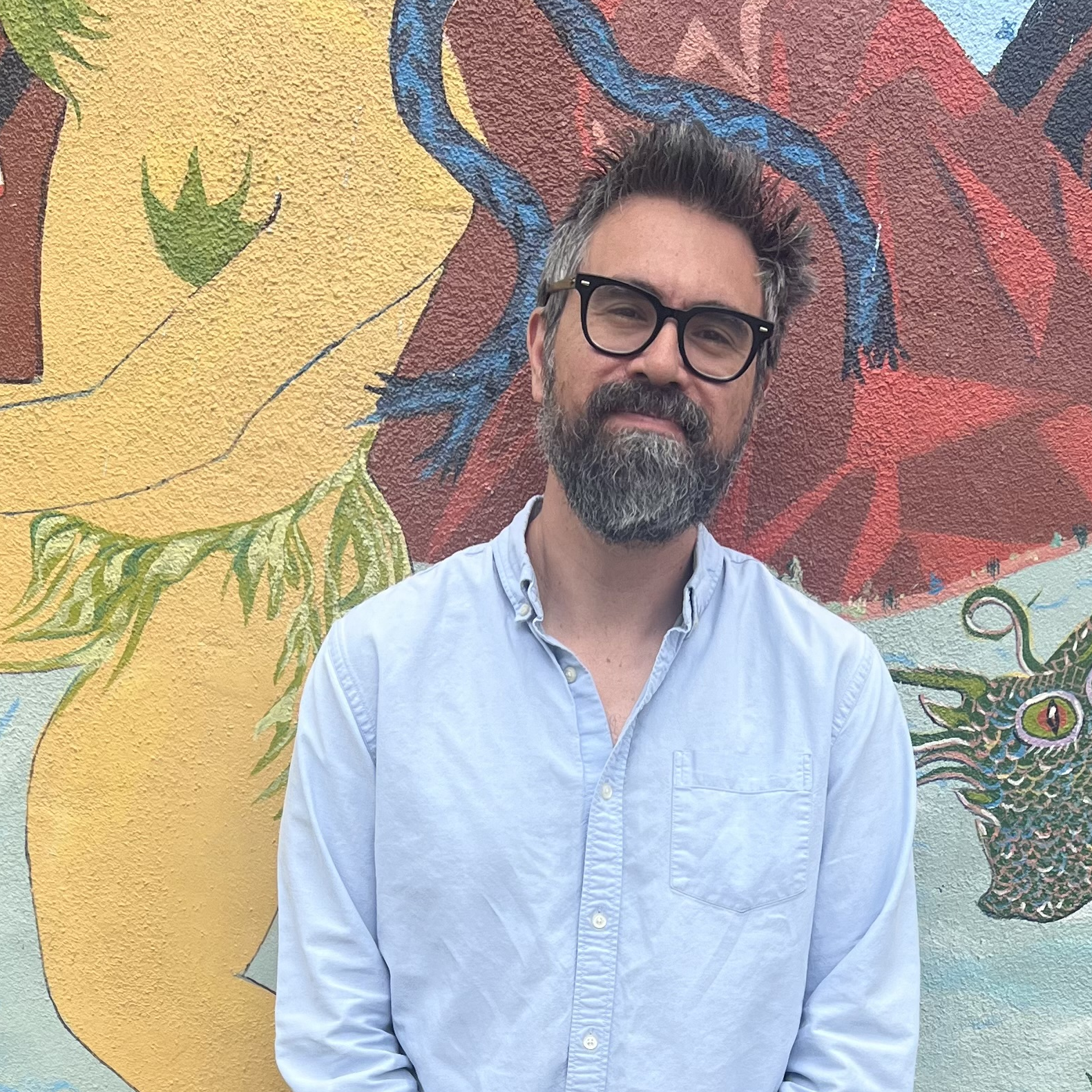
Andrew Bujkowski has written and directed seven feature films and he types 89 words per minute. Now, that brief bio doesn't begin to cover Andrew's depth of experience and I hope you'll enjoy listening to Professor Garza and Andrew discuss Andrew's time in a little known Harvard filmmaking program. Being the godfather of mumblecore, screenwriting structure and the monster that we feed.
Stick around and I hope you enjoy.
[00:01:32] Speaker B: Welcome everybody. This is the Austin Community College Right Mind event for Wednesday, February 11th. I am your host, Mr. Roark, I mean Professor Garza with us tonight. Our esteemed guest is Andrew Bujalski. And Martha, next slide please.
Let me get a little intro.
It's up there. It's on the PowerPoint. So our honored guest is originally from Boston. He enrolled in, and feel free to correct me if any of this is not correct. He enrolled in Harvard's film production program where he studied under the acclaimed Belgian filmmaker Chantal Akerman. I believe she was your thesis advisor, is that right?
His first feature, Funny Haha, was honored at the 2004 IFP West Independent Spirit Awards.
He followed that one up with mutual appreciation in 2005, which was nominated for numerous awards and also took home a couple of trophies.
Andrew relocated to Austin and shot his third feature, Beeswax in 2009, which utilized the talents of numerous local actors and filmmakers and even had Oscar winning director Damien Chazelle working as an editorial assistant.
Computer Chess, Andrew's fourth feature took home several awards, most notably the Alfred P. Sloan Feature Film Prize at Sundance.
Andrew was able to parlay his notoriety into a fifth feature, Results, which sported a star studded cast.
His critically acclaimed sixth feature, Support the Girls, received numerous nominations and took home eight awards and his most recent feature, there there 2022, which I believe was shot during the Pandemic also earned an award for its screenplay.
Oh, we're already at the next slide. Great. So here are some of the recognizable faces that Andrew has directed. Can any of you name any of the folks up there?
Can anybody name the guy in the bottom left corner?
You've probably seen him in a lot of stuff and don't know him by name.
No, no, no. Bottom left corner, Kevin Corrigan. So.
So yes, quite a. Quite a few. Quite a few people who are working in Academy Award nominated or winning features, shall we say?
What I'd like to do before we begin is play a little clip from Andrew's 2013 film, Computer Chess.
This, for those of you who haven't seen it. It's a period piece set in 1980 at a computer convention in California.
At the same time that this computer conference is going on, there is also an encounter therapy group staying at the same hotel. For those of you not aware of what encounter therapy is, it was this sort of group therapy that was popular in the 60s and 70s, mostly amongst couples.
They're staying at the same hotel and one of the computer conference attendees has managed to worm his way into the group's activities.
And I kind of feel that this clip, although it's, you know, it's a bit of a sidebar compared to some of the other things going on in the movie, is sort of emblematic of Andrew's attention to detail and his style of humor. So, Martha, whenever you're ready, if you could switch to that to be, remember to hit the full screen too.
Hopefully no ads.
[00:05:23] Speaker C: Sam, look deep within me to find what is inside.
[00:05:57] Speaker B: Go.
That's good. Thank you.
Go to the next slide, please, Martha.
So, without further ado, our guest, Andrew Bujalski, please. Let's give him a warm welcome.
[00:06:51] Speaker C: Thank you all for having me.
[00:06:55] Speaker B: So, you know, some of these questions might be a little basic things that you've already talked about before when you've been interviewed, but hopefully not too tedious. So what I'd like to know first starting off is I want to know more about your formative use years and how they led you to become a filmmaker.
Can you give us any details about your upbringing and how you became a cinephile? Your major influences growing up and were you shooting films or videos in junior high, high school, that sort of thing?
[00:07:27] Speaker C: Yeah, for better or worse, I was hooked very early. It's, you know, I don't remember a time before I was movie obsessive. When I was a kid, I was, and my parents were divorced, which I think meant I Could make, you know, one take me and then the other one take me to the movies. And you know, so I was, that was, that was my thing from early on.
And you know, I just remember when I was, I remember being obsessed with Rocky iii, seeing it over and over again before I understood that there was a Rocky one or two. And that was very exciting to learn that.
And you know, I guess this is also kind of the early days of video rental houses and so the, even pre blockbuster there was some little local ones and I'd just haunt those places and take everything home and read everything I could about movies and dream about movies all day. So, you know, for better or worse, in some ways I feel like I still kind of work for that five year old.
And there are times when that maybe it doesn't seem that wise to work for a five year old, but that's just kind of the path I was on. And I did at some point, I can't remember how old I was, but at some point get the VHS camcorder and certainly would make stuff in the backyard with my friends and nothing particularly watchable, but lots of fun.
[00:09:02] Speaker B: Yeah.
[00:09:05] Speaker C: You know, and then I wish I had a better story. I mean, I think so often the most interesting filmmakers, the most interesting writers are people who did come from some other life experience. And I think when you, when you are fixated on that, it kind of behooves you to try to find your life experience somewhere else because you need, you need something else to feed this beast besides just making movies about movies.
[00:09:28] Speaker B: Well, I mean you had, obviously you were playing around with, with video cameras and filming stuff, but what about your writing at the same time? Were you writing short stories or how were you developing as a writer?
[00:09:40] Speaker C: And I was certainly a voracious reader.
And you know, I think when I was younger, plenty of fantasy and sci fi and all that and then, but then at a certain point, kind of whatever I could get my hands on. And often, you know, stuff, I'm still a little too compulsive a reader. I still kind of insist on finishing everything I start, even if I have no idea what's going on and I'm just kind of turning the pages like I'm.
[00:10:06] Speaker B: Even if it's not particularly well written or interesting.
[00:10:09] Speaker C: Well, I try to avoid that.
But you know, there's plenty like I think, you know, when I was, whatever, when junior high or high school and you come to understand that James Joyce is brilliant. So then you try to read James Joyce and you don't know what you're doing. You go, oh my God, I'm going to be doing this for 1,000 pages. But I would just do it for 1,000 pages and get what little I could get from it.
So, you know, and I did write short stories certainly in high school and in college, and I don't feel I ever developed any particular talent for that. But know, I was committed to it and did what I could with what I had.
[00:10:53] Speaker B: Was your family supportive of your filmmaking efforts or.
[00:10:57] Speaker C: Yeah, and I'm incredibly fortunate for that. I think my, you know, again, divorced parents, I think. I think my mom was always like, she's a very partisan mom. Anything I wanted to do, she was, she was into.
And my dad sometimes I think felt like he wanted to temper that a bit or just remind me that someday I was going to have to go to the real world and pay for things.
But. But, you know, when it kind of came down to it, like, he, he was always very supportive as well.
[00:11:29] Speaker B: That's cool.
[00:11:30] Speaker C: Yeah.
[00:11:30] Speaker B: Kind of like Justin Rice's character in.
[00:11:32] Speaker C: Yeah, yeah, yeah. Mutual Appreciation.
[00:11:37] Speaker B: Okay, now I'm going to.
Well, actually, let me ask one more follow up question before I get in. Change of subject.
So you got into Harvard Film School and was funny.
[00:11:49] Speaker C: Ha ha.
[00:11:49] Speaker B: Was that your thesis of film?
[00:11:50] Speaker C: No.
[00:11:51] Speaker B: Oh, okay.
[00:11:52] Speaker C: And that I think they now have a graduate film program. At the time they did not. Which was nice in a way. And it's a weird little department that, you know, plenty of people at Harvard don't know exists.
[00:12:01] Speaker B: I didn't know.
[00:12:02] Speaker C: Yeah, yeah, it is. I think they've changed the name, but at the time it was called Visual and Environmental Studies, which, you know, nobody. It was like a 70s name and, but. And very documentary focused. A lot of the people who were teaching at that program had come out of MIT Media Lab program before that, and all those people had been instructed by a lot of the pioneers of cinema verite or direct cinema, which still Boston has a great tradition of that. Sure.
So that was kind of the core of what we were doing.
But you know, at a certain point, so we all kind of started in documentary and then it's. You could. And again, this is just undergrad. This is just.
This is my major. It's not right. You know, I'm still taking other classes, but you know, they're also able, because they're Harvard to bring in pretty extraordinary. And I got very lucky just to happen to be there when Dushan Makaveyev, great Yugoslavian filmmaker was there my.
[00:13:03] Speaker B: Wow.
[00:13:04] Speaker C: My junior year. And then Chantelle Ackerman was there my senior year as my thesis advisor. So between them and the other kind of Harvard faculty folks, I just had an incredible lineup of teachers and great people. And Duchamp and Chantal in particular, they're both brilliant filmmakers, very unique filmmakers, and both filmmakers who, as different as they are, I think one thing they had in common was that they both could move pretty fluidly between documentary and narrative. They weren't, they weren't intimidated by one or the other. And both of them also could kind of mix those languages.
And so that certainly I think had had a lot of influence. And also just seeing, you know, these like great European artists. I'm a kid from the, from the American suburbs. And so, you know, to see somebody who not only takes their own work that seriously, but then in turn is taken seriously was kind of a good lesson.
[00:14:05] Speaker B: Nice.
Now I want to turn my attention to what I consider to be kind of the 800 pound elephant sitting in the corner.
Martha, could you move to the next slide for me?
That's great.
So this is a term that often comes up when we're discussing filmmakers like Andrew.
And you can read the textbook definition up there.
In fact, in certain circles, in certain articles, Andrew has sort of been described as the godfather or father of mumblecore.
And his directorial debut, funny Haha, is generally considered to be the first mumblecore film.
But really that term kind of popped up in around 2005 at south by Southwest when I believe it was your, one of your sound assistants who came up with that term.
[00:15:09] Speaker C: Sound mixer. Yeah, the guy who's a mix on pretty much everything I've ever done. Somebody I've been working with for a good long while.
[00:15:16] Speaker B: So, you know, I took some time to do a little research and read various, you know, articles and quotes from you about how you, your feelings or your attitude towards that term and being considered like the father or godfather of a movement or whether it's even a movement. But I'd love to kind of get an update from you now that we're, you know, most of those articles were written, you know, 10 to 15 years ago or longer. So what is your attitude now towards the term mumble corps or the, or the idea that there's a movement of it of like minded filmmakers?
[00:15:51] Speaker C: Well, certainly the kind of the heat of that has power, you know, the rush to taxonomize and you know, no one really cares anymore, I think whether this. Not to dismiss the question, but I mean, no one cares. I think there's not, nobody's going to fight over the definition of this movement or whether or not this movement exists. I mean, from my perspective, that was always.
I felt like I'm the last person to speak on this topic because that's a job for, I mean, my son is doing it right now. My 15 year old son has, for better or worse, inherited many of my compulsions. And he's gotten into categorizing music and he's like, dad, what is folk rock? And I'm happy to talk to him about that. That's fun.
But when you're making something I think you're not, at least I'm not thinking that way. And I think it's just an external thing that was placed onto a number of fields. And to me, the kind of, the quasi irony of it, I think I kind of stumbled into being considered an innovator. But if the film itself is not remotely innovative, it's a very old fashioned and in fact, I think so kind of out of sync with the times. I think essentially I was making a movie like 15 Years Too Late. So it looks new.
It just wasn't. We weren't with the current trends of 2002 when it came out, but it wasn't. We hadn't invented anything. We just happened to be the next generation. Picking up a thread that I think had been there as long as indie film had existed.
[00:17:34] Speaker B: Right. But at times it seems like maybe, you know, since you were kind of, you kind of stuck your foot into the pond first, that maybe some of these other filmmakers that were around, were coming of age at around the same time. You know, it's. Maybe they drew some inspiration from it perhaps.
[00:17:51] Speaker C: I can't really speak to that man. I know by 2000 when this notion of a movement came about, or the first time I heard it was in 2005 at south by Southwest. And so my second film was premiering there.
Joe Swanberg's first film was premiering there. The Duplass Brothers first film was from, their first feature was premiering there.
So, you know, that's a.
I don't certainly, I don't think those guys, you know, all ran out to copy me. I think we, I think we had a lot of common influence, a lot of common, you know, factors. And that's where if you want to identify a movement, you can say, okay, well these were these people who were all kind of reacting to this particular moment. Because I think what, you know, we kind of came along in an era that seemed to be kind of between the Tarantino clones and the Wes Anderson Clones.
[00:18:41] Speaker B: Right.
[00:18:41] Speaker C: And we were neither of those things. But in some ways, I think, you know, maybe trying to.
That was all so highly stylized one way or another.
And I think we all had maybe a similar notion of just trying to get back to some kind of core essentials of connecting in a story that weren't about that kind of style.
[00:19:03] Speaker B: Right. Yeah, definitely. Sort of something that an audience. Characters, at least, that an audience could easily relate to because they're so much like the people that they.
[00:19:13] Speaker C: Or just. I mean, any way that you kind of react to people on screen and care about them.
I think there was maybe some. And I don't want to speak for anybody else, and I can hardly even speak for my younger self, but I think this idea that you want to be drawn into somebody else's story, and maybe if you, as the artist, can invest yourself in the character, and I'm going to invest the actors, invest the whole production, invest the whole thing in these imaginary people, that. That's going to vibrate on screen and that, you know, you in the audience might want to lean forward in your seat to commune with these characters as well.
[00:19:54] Speaker B: Exactly.
Well, thank you for being willing to broach the subject. Like I said, I know that it's
[00:20:01] Speaker C: not a third rail.
[00:20:04] Speaker B: Let's shift gears again and talk about your actual scripting process, starting with the way that you come up with your concepts.
I can sort of take an educated guess that funny, ha, ha, mutual appreciation are sort of born out of your collegiate experiences or people that you kind of knew when you were in.
[00:20:23] Speaker C: I wrote those first. Well, the first three movies I really. I wrote with the. I tried to pull the same trick of writing with the leads in mind.
So Kate Dallemire in the first movie, Justin Rice in the second one, and the Hatcher twins, Dilly and Maggie in the third. In each case, I thought, like, these were people I knew who were not professional actors. But I found them to be remarkably charismatic, interesting people who. I just had some kind of, you know, some gut instinct or paired with what, you know, little knowledge I had to go on that. That they would work on screen.
[00:20:59] Speaker B: You built. So you built your concepts or your stories around these particular actors.
[00:21:04] Speaker C: Yeah. Although they were not professional actors.
Yeah. And if. I mean, and it was a kind of a crazy thing to do. And certainly we were so young. Right.
So, you know, Kate and I were roommates at the time that I started writing that. We were in our early 20s. And I think I just. I said, hey, if I wrote a movie for you to be in Would you want to do that? And you know, like neither of us knew better than to not do it.
So she said, okay, but if I had written that script and she had said, no, I don't want to do this, then I don't think I would have tried to make it. I think I would have tried to make something else that was so designed with that, with this hack of like, I think I can, I think there's a great performance in Kate as this character and I think if I, if I get that, then I have a movie.
[00:21:53] Speaker B: Yes.
[00:21:54] Speaker C: And then I tried to, you know, pull the same trick again and I still, it's something that, it helps me quite a bit.
And you can't do it, you know. You know, you can have maybe, who knows, 20, 30 characters in a movie you can't tailor, make every part in. Or if you try, it's not going to work. You're not going to. But I do find I like doing it a great deal. It helps me to write. And that, and that also was then the best thing I had written because when I got out of college in 98 and you know, I didn't, I worked some jobs, whatever, and I did a lot of temp work, which is, you know that you see some of that in Funny. Haha. Yeah, but, but that whole time I was writing and I, I'd written, I don't know, two or three feature length screenplays and they were not good, or at least I didn't know what to do with them. You know, I thought, I thought to go make a movie. I know I want to do that. I don't know how to do that.
And the only thing I know is that I, I can't half ass it. Like I've got to give everything, I've got to risk my life for it, you know, one way or another.
And the scripts I'd written just didn't quite seem worth it until I wrote that one with Kate in mind for the lead. And I thought this, I think might be something and that was the one that was worth pursuing and we're incredibly lucky to get away with it.
[00:23:21] Speaker B: And the sisters in Beeswax, you had met them?
[00:23:25] Speaker C: Well, Maggie had actually acted in my college thesis film.
And you know, Chantal Akerman discovered Maggie walking down a hall in Seaver hall in Harvard. And she had an instinct. She said, my student needs you for his film.
And that's how I met Maggie. Okay.
And you know, just another extraordinarily charismatic person who happened to have a twin sister who was Also very different from her. But, you know, just like, I don't know, you get to. When you're a filmmaker, you kind of.
You want to marshal your resources, and you. You know, it's some exploitative part of your brain that you meet a fascinating person. You're like, I can use you.
[00:24:05] Speaker B: And when you discovered that her twin had a disability, did.
How did that or did that affect your impact, your narrative? Because, I mean, the story. I mean, she does everything she wants to do, like any of us do.
[00:24:19] Speaker C: But.
Well, you know, I mean, I met them and I met Maggie in 98 or 97, somewhere around there, and I met Tilly shortly thereafter. So I'd known them for quite a few years by the time I sat down to write the script.
And certainly, you know, of course, was.
I knew. I knew Tilly was in a wheelchair, and that was part of what I was thinking as I was writing. But I also knew her well enough to know that that's not the story. That's not who she is.
I didn't want to. I didn't have to do a disability story because. That's right. I.
[00:24:51] Speaker B: And that's one of the things that's refreshing about that movie is because it's like the disability is, like, incidental. Really.
[00:24:58] Speaker C: Yeah. And it's rare. I mean, we weren't trying to make a statement necessarily, but it is unusual for kind of, you know, it's practical reasons, certainly. It's like, if you're writing a movie, it's kind of. It's, like, easier to get an actor who's not in a wheelchair. It's easier for a lot of reasons.
[00:25:13] Speaker B: Right.
[00:25:15] Speaker C: So you don't tend to see movie characters with disabilities where that's not the focus of the character.
[00:25:21] Speaker B: Right. You're right. So. Right.
What about computer chess? What was the genesis of that concept? And by the way, I should shout out that one of your super extras, Rod Paddock, is in attendance tonight.
[00:25:37] Speaker C: Okay. All right. Okay.
[00:25:38] Speaker B: Are you the guy carrying the computer towards the camera that had no power steering?
[00:25:45] Speaker C: Yeah. And that's how I got to be an extra. Incredible.
[00:25:48] Speaker B: Came in there and said, anybody in this room know how to drive a stick shift car? And I'm the only one.
[00:25:52] Speaker C: There you go.
Fantastic.
I just. I just saw you. We did. We just screened that movie at University of Chicago last year. I didn't watch the whole thing, but I saw. I saw you up there.
[00:26:04] Speaker B: Fantastic.
[00:26:04] Speaker C: Yeah.
[00:26:06] Speaker B: So the genesis of the. Of that concept, because it's. It's. To me, it's a pretty Big departure from your previous three.
[00:26:13] Speaker C: It's a period piece, It's a leap off the cliff. Everything about it's crazy. And, you know, we're here in. Speaking of screenwriting, that's the only movie I ever did without a fully realized conventional screenplay.
[00:26:26] Speaker B: Oh, really?
[00:26:27] Speaker C: Okay. So that, that. And it's real hard to reconstruct how any of this came to be.
But I had. It had been a notion in the back of my mind for years.
And at some point I had breakfast with a filmmaker buddy and, you know, we were kind of talking about our dream fantasy projects that are too crazy to ever make.
And I was talking about that and my friend dared me. He said, well, write a treatment, you know, have it on my desk in a week or whatever.
So I wrote a treatment and then I kind of put it away for a while.
But at a certain. When my. After I finished the third movie, I got married, my wife was pregnant.
I was trying to make a more conventional movie and, you know, meeting with famous people and that kind of stuff.
And that movie seemed like it was going to come together and then it fell apart and I had a, you know, new dad panic thing. I thought, if I don't make something right now, I'll never make something again.
Let me pull this eight page treatment out and we're going to.
I don't have a full script. I wouldn't know how to write this full script because it's like there's so much technical jargon in it that I would need to go to school for a year to know how to write the script.
We're going to shoot it on these kind of experimental camera rigs.
It's a period piece. We have no money.
I got no cast, I got nothing. Let's, you know, let's go. We shoot in three months.
And somehow that.
I don't know how that's possible, but we got away with it. I mean, you know, and I will say that working without a full script in many ways just forced us to be more prepared.
It was not that dissimilar.
It was in, you know, an equal, if not more work than.
So I wouldn't recommend it to anybody as a, you know, work saving mechanism.
It just meant that, you know, you know, that kind of thought that you do on the page you sort of did in a different form.
But we had unbelievable actors and unbelievable actors. I think it's the greatest extras ever assembled. Like, certainly, it's just an unbelievable group.
And there are scenes in that. The first scene of the movie is a Scene where we're interviewing the extras and that's unscripted. That's just like they're ad libbing the opening of my. I didn't know that was the opening of my movie until I got in the editing room. I was like, these guys are all great.
We're starting with this.
[00:28:56] Speaker B: So it was your talent that came up with all that technical jargon or did you?
[00:29:00] Speaker C: A lot of it. So last week I was up at University Chicago and we screened the film with Professor Gordon Kindleman, who plays Professor Schesser in the movie.
And he is a computer science professor.
He was the only like full on academic in the cast. But we had a lot of other folks.
A guy named James Curry, who plays the British programmer.
He's.
He works just in corporate stuff, but he's. But he, you know, he was.
He knew those 80s computers because he was programming on them when he was a kid.
[00:29:32] Speaker B: Wow.
[00:29:33] Speaker C: Wiley Wiggins, who's in the movie, who, you know, did have an acting background, but also was a computer nerd. Like there was a lot of knowledge we could draw on from the cast. And of course we had a lot of advisors around and that was very helpful as opposed to me trying to kind of figure it all out and make it. Make it just right myself.
[00:29:54] Speaker B: And then based off the, off of the festival success of that film, was that what got you results or how did that.
[00:30:03] Speaker C: That was just another panic, I think. You know, that was like I'd kind of.
Computer chess was so much fun to make and certainly, you know, by most metrics like it.
I mean, I think it's still probably my best liked film. I don't know how you measure these things exactly, but, you know, and it got, it got seen and got well regarded. But definitely I dug myself into a hole also. It was like this was my fourth movie and I was like, I can't now. I'm a dad and I have a mortgage and at some point I should try to figure out the thing where you do this and somebody pays you.
And so it seemed like that was the moment. Like, I gotta jump on this right now or never.
So, yeah, so I wrote results again, kind of pulling the same trick where Guy Pearce I had met for another project that hadn't happened. But I was very intrigued by him.
Kevin Corrigan is somebody who I've loved as an actor for a long time.
[00:31:08] Speaker B: Yeah, he's great. He's wonderful.
[00:31:10] Speaker C: And so I think I'd fantasize the word and just, you know, just like thinking about what actors would I want to work with? I think I thought of Guy and I thought of Kevin, and I was kind of already laughing because I thought what. I couldn't imagine what kind of bizarre movie would contain both those presences in it. Yeah. So that sort of started me down that road. And that's the quickest I've ever made anything, unfortunately. But that, you know, that was two years exactly between those movies. And that. That, for me, is fast.
[00:31:34] Speaker B: Yeah. No, that's.
That's incredible.
But it's. I mean, again, creatively, it's such. I mean, it's also a big departure from Computer Chess. So I'm just kind of wondering.
[00:31:47] Speaker C: It isn't. It isn't. I think. I mean, certainly I was trying to 180 because computer chess had been the most, you know, weird, experimental, like, let's alienate everybody movie I could think of and then results in my mind was, okay, it's going to be colorful and pretty and glossy. It's gonna have very attractive people in it, and they're gonna kiss each other. Like, this is.
This is something everybody wants to see.
And then it was a good lesson for me to. When we released that, to have it, you know, obviously it's not the same movie, but I think it was received as kind of equally bizarre. And I thought, okay, that's me. I did that.
That's my voice.
[00:32:32] Speaker B: Have budgets and keeping things contained, has that been sort of a factor in your conceptual choices? I mean, certainly early on when you didn't have, you know, you didn't have access to funding, per se. But how about later on with.
[00:32:46] Speaker C: Well, it's still a struggle, and Lord knows, I mean, it's getting harder and harder, as I'm sure you hear from everybody.
[00:32:51] Speaker B: Right.
[00:32:52] Speaker C: But it's a tricky thing in a way, because you're always going to hear both sides of it now you're going to have everybody telling you to cut costs because nobody wants to pay for anything. But you're also going to have everybody tell you it's too small, make it bigger, make it bigger, make it bigger.
I think the notion is that nobody wants to, and it's expanding. But there's always been this notion of the financial dead zone. It's like, no one's going to make a movie between 2 and 10 million. But now I feel like it's between $20 and $100 million. It's like, pick one.
So it's hard.
[00:33:31] Speaker B: It's definitely hard.
[00:33:32] Speaker C: But of course, certainly, I think you have to be. One way or another, you have to be resource conscious. Yes. Which isn't to say, I mean, by all means, if you have Avatar in your head, then write Avatar. But you just. Then you gotta go find your billion dollars.
[00:33:47] Speaker B: Right, Exactly.
I think I'm gonna ask one more question before I kind of take field questions from our audience.
And this one has to do with structure. Do you feel like you have any particular methodology? Because to me it seems like one of your hallmarks, especially in your earlier works.
Abrupt, open ended kind of finales to your stories.
The individual scenes themselves there, their lengths, their trajectories can vary quite greatly.
And as far as your overarching structure, if we were to kind of take a film of yours and study it, there's a progression, clearly a story progression in terms of the events, the actions of the characters. I don't know that I necessarily notice things like major turning points or rising actions per se that are what we traditionally teach in screenwriting or film schools.
[00:34:43] Speaker C: So
[00:34:47] Speaker B: do you have some sort of mantra or aesthetic that you follow structurally?
[00:34:52] Speaker C: Well, structure is everything, for sure. And I feel like I don't know what I'm writing until I know the structure, which is why it's been hard for me to, you know, when I've kind of dipped my toe into trying to write for TV or pitch stuff for tv, it's. I find it challenging to write something where I don't because it has to be open ended structure. You're not allowed to end it. Right, right.
And unless, I mean, I think nowadays they have these limited series and things where you can build a little more structure in. But I've tended to do these things where it's like, let's try to keep it on for 10 years, even though you're not going to get to the first episode, but if you did, you want things to be infinite. And that's hard.
I really like to know where I'm going because then I do feel that, you know, and I'm married to a novelist, so my wife sits there and does real writing all day and it looks like torture. And I don't know how she survives it and I don't envy her at all.
But, you know, that's the kind of words matter there.
I don't. They don't matter in the same way in screenwriting. And I'm, you know, like, certainly there's a place for clever dialogue. And when it's, you know, when it's in the right setting, I like it as much as anybody.
But for me, when I'm sitting down and I Mean, I come to you from having spent today banging my head against something, trying to figure out the structure and making myself miserable.
But that's it. That's all there. Like, I think really, that's all screenwriting is, is like, what's the feeling of something. But, you know, the way we're going to convey that feeling is short scene, long scene, long scene, short, short, you know.
[00:36:49] Speaker A: Right, right, right.
[00:36:50] Speaker C: It's going to be a matter of how these things turn, how they relate to each other, what energy they give to each other, how something feels out. It's, you know, Tarkovsky called it sculpting in time.
That's the gig.
[00:37:04] Speaker B: But there's like an, you know, and many people have said this about your work. There's an incredible improvisational feel to it. I mean, it's. Especially in terms of how scenes can, you know, it feels like you're a fly on the wall, like you're listening to two people having a fairly ordinary conversation. And I'm wondering to what degree, you know, what ratio there is in terms of being completely scripted out versus having some ad libbing by the actors. I mean, what's.
[00:37:33] Speaker C: Depends on the movie and the situation. I know the only thing that I'm.
And when I'm on, if I, if I'm directing, if I'm on set, it's a great opportunity to murder the writer.
[00:37:47] Speaker B: Yeah.
[00:37:48] Speaker C: You know, it's. And nothing feels better than when an actor gives you something that is better than what you wrote.
I'm all too happy to abandon agree words on the page.
And you know, if you, and sometimes it depends, you know, who you're working with, but sometimes you have to.
Sometimes they might be, you know, when you get old and all the words leave your head.
[00:38:13] Speaker B: I sure do. Yes.
[00:38:14] Speaker C: Sometimes they might be reluctant to do that, to go off the script, but I find, and ultimately, you know, I think we are going to be hewing to the structure of how things are written. But as far as grace notes, ideas, or certainly ideas where an actor can, you know, it's like you wrote a half page monologue, but I can just look at them like this. And you go, oh, yeah, that's all I need.
But I will say it also depends on what we need in a given moment. The last movie I did was a crazy experiment called There There, where we shot the actors in isolation from each other. They never saw each other, they never saw each other's performances.
So there was no room for improvisation there. You couldn't ad lib on one side because we Already shot the other side of the scene three months earlier.
So that had to be real tight. But it just. It depends what you need and when you need it and where you need it. For me, all I care about is that it feel alive on screen.
And we'll do whatever it takes to get that. And, you know, just as the director kills the writer, then the editor kills the director.
[00:39:21] Speaker B: Right.
Cause it seems like in certain scenes, you feel like the scene probably went on longer, but then once you got into the editing room, that maybe you decided you were going to cut it off a little earlier than you anticipated.
[00:39:34] Speaker C: It totally depends. Yeah, we just try to make it feel good. And sometimes maybe. Sometimes.
Sometimes I wrote it perfectly, other times I didn't. But you'll never know the difference. That's right.
[00:39:45] Speaker B: I won't ever know the difference.
I feel like I've talked quite a bit now, so why don't we open the room up to questions for Andrew.
Aidan.
Oh, yes, I'm sorry. Please come up to the mic.
This is a new procedure for us.
[00:40:05] Speaker C: It was so Donahue. Donahue would hand them the mic. I don't know who did this.
I already know that you've explained that you don't exactly see mumblecore as,
[00:40:16] Speaker B: like, a solid movement.
[00:40:19] Speaker C: But I was wondering if you have any notable films in mind or general
[00:40:25] Speaker D: media that you could define as mumbled
[00:40:27] Speaker C: core that have caught your interest.
[00:40:29] Speaker D: Well,
[00:40:32] Speaker C: I wouldn't.
I think there are a lot of things that other people might define that way that I'm fond of. And the folks I mentioned who were kind of with me there at that ground zero. I'm certainly a fan of Swanberg, certainly a fan of the Duplasses. There's a guy in Chicago named Frank Ross who I think gets lumped in there. And I think Frank is a genius.
He's the worst self promoter I've ever met. So nobody knows his stuff. But I love his films a lot. And he's making a new one now, which is exciting.
But, you know, I mean, it's. The categorization doesn't mean that much to me. And if people, you know, sometimes I'll see people reach back and say, oh, look, this, you know, little fugitive from 1953 is Proto Mumblecore. You know what it's like. I mean, that's not true.
But, boy, I love that movie. That's better than all of our movies.
Do you?
[00:41:31] Speaker B: I know.
Mutual Appreciation. Somebody compared it to Eric Roemer's films.
[00:41:37] Speaker C: Is that I love Roemer, but. But I. But it wasn't I wasn't thinking about Tim when I. When I went and made my movie.
[00:41:45] Speaker B: Right.
[00:41:46] Speaker C: I mean, I hadn't seen much. I still haven't seen. He's so prolific. I haven't seen most of it.
[00:41:50] Speaker B: That's right.
[00:41:50] Speaker C: Just love what I've seen.
[00:41:53] Speaker B: Anybody else want to step up to the mic?
[00:42:01] Speaker E: I don't really know what the fascination with having to label it mumble core is anyway, personally, because I mean, like Mike Lee made Meantime with Gary Oldman. I don't know if you'd consider that mumble core.
[00:42:14] Speaker C: It's not up for me to decide.
Get a critic in here to talk about it.
[00:42:18] Speaker E: I was thinking that and it was like, there's the tradition of devised theater which goes back to New York City and like the, you know, from like the 30s to now. And Second City writes scripts where they improvise and they turn them into great scripts. Anyway. My question is actually what improvisational techniques and rehearsal techniques did you use to help the actors get into character, to draw out the amazing connection and dialogue? So I am fascinated by device theater. I'm fascinated by Mike Lee's work.
[00:42:46] Speaker C: He's the best.
[00:42:46] Speaker E: And Mike Nichols, I love Mike Nichols, the way he would rehearse actors.
So I'm very curious about things. You tried to get them to connect and bring out that dialogue and the emotion in them.
[00:42:57] Speaker C: Yeah. I mean, Mike Lee also gets these actors for like, I don't know how many months before they go make the movie.
I wish I could do something like that. But he's also working with, you know, highly trained, highly dedicated actor actors. And in a way, I think.
But he gets the best out of them. They never look like actors when they work with him because they're. And they'll do very well anyway. You didn't ask me about Mike Lee for me, so I've never had that luxury of months and months. It's always catch as catch can do what you can with what you can.
And I've also had fairly different experiences in the time I've been doing it where when I'm my early films, it's entirely non professional cast, whereas the last few, it's majority pros. And in both it's more similar than you might expect. And first of all, you never have enough time with either of them.
Second of all, they're all. No matter how much experience you have or don't have, you're still wildly insecure, which is good because I realize that's kind of the raw material, I think that we work with as directors is that insecurity and that uncertainty. And so I want that.
Not that I want people to be unhappy. I'm not trying to undermine anybody, but I do.
We got to be asking questions all the time.
So I try to meet people where they are. I think that's a lot of it, and just kind of get what we can. But I'm less interested in nailing it down.
I'm less interested in showing up to set Bulletproof than I am in just kind of developing a common language.
So I'm always happy to run just a kind of blob of an improv where we say, well, the scene's sort of about this, and let's just run with it. And it goes on too long, and it's not that great, but little great things kind of bubble up. And that's really informative and really helpful. You kind of know when you're catching a rhythm, and you can remember that when you're in the moment.
And even just for people to. I'll often encourage people if you're playing people who know each other well, if you're playing a couple or siblings or even just friends, sometimes I'll. To people like, if you guys can go just hang out, just get a drink together. If I, you know, with or without me, anything we can do to kind of start to be syncing up and learning each other, I find very helpful.
[00:45:39] Speaker E: Thank you so much.
[00:45:40] Speaker B: Yeah, thank you.
[00:45:41] Speaker E: Appreciate it.
[00:45:41] Speaker C: Thank you.
[00:45:43] Speaker B: Step up to the mic, folks.
[00:45:46] Speaker A: We have a couple of chat questions.
[00:45:48] Speaker B: Oh, yeah, sure. Why don't we. Why don't we tackle some of those? Go ahead.
[00:45:53] Speaker D: Hey, I just recently watched Computer Chess, and one of the scenes, I guess that stood out to me was when the character that's sort of stumbling throughout the hotel goes to, I believe, his mother's house. He has sort of a break in time instance. And I'm always sort of curious about sort of the manipulation of time as a storytelling device. So I guess from like a writer's perspective or a director's perspective, how. How do you see sort of the condensation or the expansion of time as sort of a tool to say something a little bit deeper than by just telling it normally?
[00:46:31] Speaker C: That's a great question. I don't know that I have a good verbal answer to it. I think it's something you kind of feel. And that, to me, that's what's satisfying about making it to the editing phase. Editing is the. Is the part where I really start to feel like, okay, now we're making A movie. Everything else was fishing. Everything else was just kind of going out there and seeing what we can catch in our net.
But it's in the edit that you can really start to shape time, which is what matters. I think I'm imagining it. I'm dreaming of it when I'm writing it on the page. And that's the structure stuff I'm talking about. About.
Well, this scene should breathe a little more. Let's give this an extra beat.
But you don't really know until you have it, until you've seen actors do it, until you've kind of felt that duration on screen.
[00:47:21] Speaker D: And just like following up on that, because I know you write, direct and then edit your films. So, like, how do you. I guess.
How do you put those different roles, I guess, into its sort of individual buckets of responsibility as opposed to kind of, I guess.
So I'm taking an editing class. And I guess, like, one of the main things that they mention is sort of the relationship between, like, the director and the editor and how sort of that partnership lends to some, you know, creative challenges.
But if you're doing, I guess, all the roles yourself, how do you sort of divide those responsibilities?
[00:47:59] Speaker C: Well, just.
And I should say I've done two movies with editors who weren't me, and great experiences with both, you know, just great people, great collaborators, very lucky to have, you know, they both were as committed to those projects as they were and were kind of willing to put up with me.
But you know what? I haven't. What I have seen some, like when I acted in a movie that Joe Swanberg did a long time ago, and Joe, because he's incredibly energetic, we would. We would shoot during the day and we were all just staying in this one apartment together. This is very, very, very low budget situation. So the entire cast is just crashing in this. I'm sleeping in a sleeping bag on the floor, and while I'm asleep, Joe is sitting at a table editing what we shot during the day. And the next morning I'm kind of rubbing my eyes and Joe's like, you want to see what we did yesterday? That's crazy.
And I think Steven Soderbergh works the same way. I don't want to do that.
And there will be pressure to do that certain.
Especially if there's money around. Especially if people like, well, we gotta be ready for Sundance. There'll be pressure to cut the movie while you're shooting. I really prefer to be kind of one person at a time. And there are things that are helpful I mean, sometimes you can see something and go, okay, I see what this is. You know, that can affect your shoot. But for the most part, I just want to get. I just want to gather everything and then sit down with it, because I know I'm going to be spending however many months sitting there going over the material over and over and over again looking for it to teach me what to do with it, and I don't want to try to do that on the fly.
Thank you.
[00:49:50] Speaker A: I'm going to paraphrase this question because it's got parts you talked about, and I'm going to butcher the name, too. Yen, thanks you for coming out. We all appreciate you coming out.
And the question is about the monster that you mentioned. Has that monster evolved, regressed, changed over the years? And then a second part of that question is, do we worry that healing the monster is going to affect creative output in some way?
[00:50:16] Speaker C: Which monster was I talking about?
[00:50:20] Speaker A: The one you feed to write and create.
[00:50:22] Speaker C: Oh, okay. Yeah.
Do we want to heal them?
I think. Are we saying, does this work come from.
From pain and struggle? I mean, yes, I think.
I don't think exclusively from that. I know.
I mean, for me right now, a lot of my longing to get out there and do it again is.
You know, making movies is hard. It's painful. I've never. I felt too old for it when I was very young.
But it's a joyful thing.
And especially.
And that's what I.
When I see my wife sit alone in the room and try to write a book, it is so incredibly lonely, what she has to do.
And filmmaking is not that. There is. Screenwriting can be that. But screenwriting is also kind of mercifully brief, at least compared to writing a novel.
You do it with this notion that at some point you're going to get.
Whether it's just a few friends or a gigantic crew, you're gonna get somebody else in the room with you, and you're going to try to make some magic together.
And it's pretty gratifying, even as it's exhausting and draining.
So what was the question?
Do you want to heal the beast? I mean, As we speak, AI tools grow more powerful by the day. They can take over all this work for us. We don't ever have to make another movie again. They can just do it.
And that doesn't sound that appealing to me personally.
Not at all.
[00:52:10] Speaker A: Evan asks if there have been any trends that your other filmmakers have seen that have become industry standards, whether it's in front of the camera, behind the camera. Things that started off as quirky and maybe became the thing.
[00:52:26] Speaker C: Oh, I mean, you know, you can name them as well as I can or better than I can. Of course. There's always.
There's always. I mean, I do.
I was saying earlier about, you know, kind of coming of age as a filmmaker kind of between the.
Between the Tarantino clones and the Anderson clones. Like, there's just. There's all kinds of. Whenever anybody does something that's original and cool and exciting, others will want to imitate it. And it's fascinating how often it goes wrong. And I think. And you can become a connoisseur of that kind of stuff, too. I mean, it's like, I kind of wish we had.
The algorithmic nature of contemporary movie making has seemed to take a lot of the fun out of that. But there was a time when I was a kid where, like, okay, we all have to go try to make Star wars now, and we're just going to guess at how to do it right, and some people are going to do it so wrong that it's awesome.
I feel like some of the awesome has gone out of that.
But, you know, and, you know, Star wars itself is, like, wildly imitative. It's stuff that. It's all of the stuff George Lucas liked as a kid kind of run through his blender, and it came out great.
So there's always.
You're always feeding off what's around you. And that's maybe the scariest thing about being a filmmaker today, is that trends still exist. But they're algorithmic trends.
[00:53:59] Speaker B: Yes.
[00:53:59] Speaker C: And they don't.
It's harder to kind of, you know, engage or have a fun conversation with that. That also just might be old man
[00:54:07] Speaker B: talking, trying to get ahead of the curve. But, you know, other questions from out there.
Hi.
[00:54:24] Speaker C: Hello.
[00:54:25] Speaker F: I wrote mine down, and I'm glad I did because it just went out of my head.
[00:54:29] Speaker C: So.
[00:54:30] Speaker F: Something that I really love about your movies is that I feel like you're very kind to your characters. And I often feel like they're doing their best and they're going to be safe eventually, you know.
And I'm a poet. I teach poetry here. And I.
Me and my students, I think sometimes struggle with this idea that you have to have turmoil and peril, even, you know, in a movie and. Or in a. In a movie, in a poem, whatever genre we're writing. Right. And I just wondered if you ever kind of labored under that idea and how you kind of work to subvert it or if you even do consciously work to subvert it, if that makes sense.
[00:55:14] Speaker C: It does make sense.
I don't, I, yeah, I don't, I'm, I don't do anything consciously, but I, but I do.
What you mentioned, what you refer this idea of people just trying to do their best, you know, that's not, it's not the stuff of conventional drama, but it is what I am drawn to as a dramatist because that's where those are the stories I'm interested in is what.
People trying to reach each other and failing and occasionally breaking through. But this is, you know, I think it is the stuff of my own daily struggles and it's the stuff I tend to respond to on screen one way or another. So it's what I'm, you know, everything I've ever done is some kind of comic, maybe tragic comic story about communication and people trying to get to each other. And I want to like the characters because I, you know, I want to like watching it. So I, it makes it a more pleasant experience for me. I've never, I struggle with writing a villain. I can't really do it.
I can write deeply, deeply flawed people. I can write people who do fucked up things, but I can't quite write a villain.
[00:56:45] Speaker F: Thank you.
[00:56:46] Speaker C: Thank you.
[00:56:48] Speaker B: Yeah, yeah, go ahead.
[00:56:51] Speaker A: One more from the chat.
Should new writers stick to character archetypes that they're familiar with or should we be following wherever the character takes us, wherever the words take us?
[00:57:07] Speaker C: I go with that. Yeah. I mean, write what you want. It's all an experiment. And, you know, and if it's, if it sucks, then throw it away and start again.
But I think by all means you should write what you want to hear and what you want to see. Especially in screenwriting. I mean, it's all kind of imaginary anyway. That's where it's not real writing. Right.
It's another document. A helpful.
It's like I like to imagine it's a little more artful, but essentially when you're on set, you've got the script and you've got a budget and you've got a schedule and these are all just things that help guide the director and the crew and the performers to go make this thing.
So I think by all means, follow your imagination because that's where it's going. It's just going to be a dream on a screen.
[00:58:10] Speaker B: Other questions from the room.
Ah, good.
[00:58:16] Speaker F: I think we've got like two minutes left.
[00:58:18] Speaker C: I'm always telling my students that you have to keep adding fuel to Your creative fire. Like you're still taking in stuff from the world. What are you reading, listening to, watching? Like what's fueling your fire right now?
That is a great question.
I don't know.
I keep reading things by people I read when I was a kid. It drives my wife crazy that I'm still reading the Same Old Men, but I try to diversify and I try to read new authors too, and everything, but I don't know, right now I'm reading a Roddy Doyle book and he's a great old man.
So I try to see whatever I can. Try to get out to the movies, you know, at least once a week, which I'm a parent and that's not always something I can pull off. But.
And that's not because I'm very compulsive about theatrical experience and I don't like to watch things at home. So it's good because I end up. The limitations end up making me just kind of catching what I can catch. You know, it's like. And especially if something's showing on 35 millimeter at the Austin Film Society, which is like, probably like walking distance from here. Right? You guys should all. Yeah.
So, yeah, I mean, just go there all the time. Whatever. The showing is going to be good.
And it's a grab bag, you know, I mean, I kind of get what I get. I get, you know, it's by the good graces of the programmers over there and whatever shows up at the Alamo and music, lots and lots of it. My kids are making me learn about new things and that's challenging. But I like, I like that one Sabrina Carpenter song. It's stuck in my head.
The one that sounds like abba. I don't like the other one.
[01:00:07] Speaker B: Since we're close to wrap time, I'm gonna ask the final two questions if that's okay.
Have you considered or are you considering writing outside of the drama dramedy, comedy genre? In other words, more genre based stuff like sci fi, thriller, horror. Do you have any ideas in that
[01:00:26] Speaker C: realm that you're Vaguely, but they're also, you know, I tend to find that when I try to think commercially, it just ends up more bizarre.
[01:00:38] Speaker B: Might be a good thing.
[01:00:39] Speaker C: Well, it might be, but I struggle. I mean, certain. And look, I've tried to make a living at this and it's a struggle, I assure you.
But I've, you know, I've done professional jobs and I've worked on the Disney lady and the Tramp remake. Nice.
So, you know, I've Kind of done that coloring within the lines and it's a different.
It's a different headspace.
Every. Every situation's different. If I'm right, if I'm writing something for myself to go do, then for better or worse, I'm the North Star. It's like the thing I want to see is the thing. Thing I'm writing.
If I'm writing Lady and the Triumph, then I don't have no illusions that it's my vision. I'm just trying to kind of give Disney what they want.
[01:01:21] Speaker B: Right.
[01:01:22] Speaker C: I can't help but some of me sneaks in there for better or worse, and then they hire five other writers to get the me out of there.
But, you know, I mean, I can, I don't mind. I enjoy those limitations, especially if I'm getting paid to enjoy those limitations.
But of course, you still need to find something. There's got to be some kernel to connect to. And with really big genre stuff, I mean, I think I've kind of learned for better or worse, those, like the hardcore genre audiences can be pretty unforgiving about it, you know.
Yeah. So. And I learned that with results to some extent because, like, you know, it was. We were playing with romantic comedy tropes there. There are certainly aspects of Rom com genre movie in there. And it, you know, it kind of is a ROM com, but.
But it's also like there's not even a clear protagonist. Like there's all this stuff where it's, it's, it's just like not following the rules. Which I thought would be fun and funny, but certainly like the hardcore ROM com people. Mm. Don't like that.
[01:02:37] Speaker B: Can you tell us anything about what you're currently working on or what you're hoping to.
[01:02:41] Speaker C: I got a movie I want to make and it's hard, but.
And it actually is kind of. It's very different now. But the same thing that I started writing after my third movie that fell apart and then we made Computer Chess. Like it's, it's kind of. I put that aside for more than a decade and then we kind of brushed it off, changed a lot about it.
And trying to do a very different version of that idea now.
I need millions of dollars to make that movie. I need.
[01:03:12] Speaker B: Sure.
[01:03:13] Speaker C: And I don't know where I'm going to get those right now, but we're trying to do that.
And I'm writing a TV pilot, which is fun, challenging.
Again, this kind of tricky situation where I'm not.
I've had a lot of creative freedom with it so far, of course, we haven't kind of really hit the is
[01:03:36] Speaker B: it spec or assignment work that you're talking about?
[01:03:38] Speaker C: It's sort of. It's assignment work. But we spent years developing this pitch because it's gotten so hard that that window has really narrowed.
[01:03:46] Speaker B: Yeah, sure.
[01:03:47] Speaker C: So we spent like three years on our slideshow deck to pitch it, which is not my it's not what I thought I would be doing as a writer, but I'm getting kind of half paid to do it now. And so that's great and tricky because you're trying to make it the best version of it that you can for yourself, but also trying to anticipate what the market's gonna need from you and all that stuff.
[01:04:18] Speaker B: Sure.
One small additional question before we leave.
Any advice to aspiring filmmakers or screenwriters out there like these?
[01:04:27] Speaker C: Well, I'm so, you know, because when I started down this path, I was a kid, and I was a kid in the in the time when movies ruled the culture in a way that they don't quite anymore. So if you're here now, you're not here by accident. You must really like movies and you must really be interested in writing them. So you're kind of screwed already.
You're stuck with it. I think just give it your best shot and do what you want to do while you can. That's the closest thing to advice I have. You have the rest of your life to get your ass kicked by external pressures. But while you can just write the thing you want to see, I think that's. That's worth doing and try to make it if you can.
[01:05:13] Speaker B: Great. Andrew Bulski, Bui.
[01:05:20] Speaker C: Thank you all for.
[01:05:25] Speaker A: Hey, y'. All, thanks for listening. We hope you enjoyed and we hope we see you next time on the Right Mind.